


Until recently, it wasn’t a name that showed up much anywhere — a rural outpost in Eswatini’s Lowveld, in a cluster of chiefdoms that a regional development bank’s own project files once described as associated with chronic poverty. That description no longer fits, and the reason is worth tracing carefully, because it’s a genuinely clean example of what DFI capital is supposed to do and rarely gets to actually demonstrate this plainly.
The Capital That Went In First
The catalyst is the Lower Usuthu Smallholder Irrigation Project, Phase I — E1.2 billion, approved in December 2001 and rolled out from 2004, implemented by the Eswatini Water and Agricultural Development Enterprise. The financing stack behind it reads like a roster of the region’s development finance institutions: the Government of Eswatini, the European Union, the European Investment Bank, the African Development Bank, the Arab Bank for Economic Development in Africa, and the Development Bank of Southern Africa, per the Times of Eswatini’s own reporting on the project’s outcomes. AfDB’s own project records show it as the single largest financier, with the International Fund for Agricultural Development also contributing to the broader LUSIP programme’s downstream components.
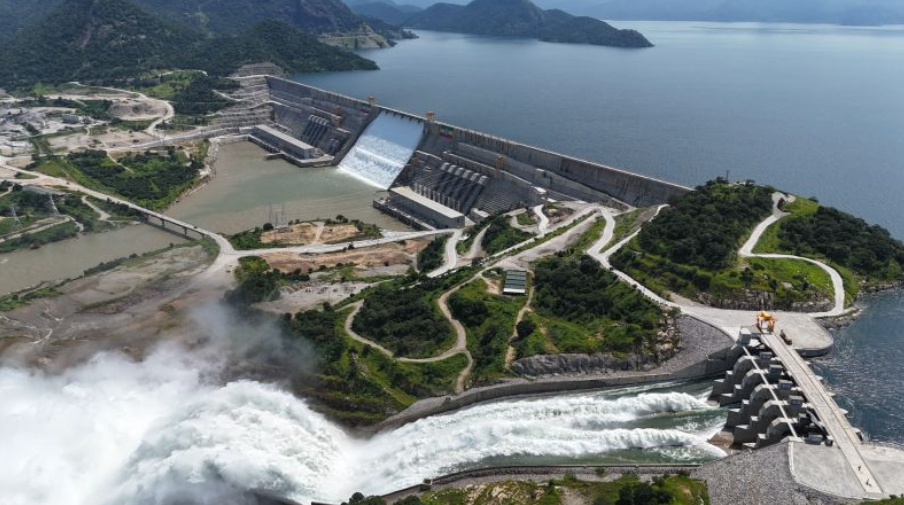
The engineering was straightforward in concept and enormous in scale: three dams forming an off-river reservoir capable of impounding 155 million cubic metres of water, diverted from wet-season flood flows in the Usuthu River, feeding a irrigation network across roughly 6,500 hectares that previously depended entirely on rain-fed farming.
What Twenty Years of Irrigation Actually Built
The outcome figures are consistent across two independent sources rather than resting on one press mention. EWADE’s own CEO, Dr Samson Sithole, gave the same numbers in a separate Times of Eswatini report published nearly a month after the original: more than 20,000 people benefiting across nearly 3,000 homesteads, 60 farmer companies, and roughly 5,100 people employed through them. The shareholder figure specifically — more than 3,100 people holding stakes in those farmer companies — comes from the Times of Eswatini’s original report on the project’s outcomes. Worth noting for its own sake: those current figures land almost exactly on the project’s original design target. AfDB and EIB’s own 2018-era project documentation described LUSIP I as built for “about 2,600 beneficiary households (about 20,000 people)” — meaning two decades on, the project is landing close to what it was engineered to deliver, not falling short of it or requiring an inflated retrospective claim to look successful.
That stable income base is the mechanism, not a side effect. A DFI can fund irrigation infrastructure. It can’t manufacture a consumer economy directly. What it can do is remove the single constraint — reliable water — that was preventing one from forming, and then wait to see whether commercial capital notices.
The Part That Makes This Worth Writing About
Commercial capital noticed, and one of its own executives has explained why on the record. FNB Eswatini’s Chief Executive Officer, Thokozani “TK” Dlamini, spoke at the opening of the bank’s 13th branch nationally, sited at Siphofaneni Plaza in April: “This project here in Siphofaneni is one of many initiatives we have undertaken to demonstrate our commitment to bringing meaningful financial services closer to emaSwati. At the centre of our decision were the needs of our customers and the broader community in this area.” He was explicit that this was a demand-driven call, not a development mandate: “Siphofaneni is experiencing steady growth, making it a strategic location for investment.” That’s a bank’s own chief executive naming rising local demand, not policy or subsidy, as the reason his institution moved in — on the record, at the branch’s own opening, not inferred from a press release.
As of this year, Siphofaneni has also attracted Shoprite, Ackermans, PEP Stores, and Build It among national retail chains, plus Standard Bank, Nedbank Eswatini, EswatiniBank, and FINCORP on the financial side, alongside TotalEnergies and Ruchi Wholesalers for fuel and supply-chain logistics.
The clearest evidence of how far this has moved from development-project territory into ordinary commercial real estate: MA Properties built a retail plaza in Siphofaneni through its Blue Zone Properties arm, financed with E56 million from EswatiniBank, anchored by national brands and a Hungry Lion outlet, with the Public Service Pensions Fund brought in specifically to manage the property’s operations. A domestic pension fund taking an operating role in a shopping plaza in a town that, twenty years ago, had no reliable irrigation, is about as far downstream from the original DFI loan as this kind of capital chain typically travels — and it’s real, dated, and happening now rather than projected.
Neither MA Properties nor PSPF has spoken publicly about that specific decision — Blue Zone Properties’ only public point of contact is a phone number, and PSPF’s own materials describe its general mandate without addressing this transaction. TACR’s search couldn’t surface a named voice from either side, and closing that narrower gap would need direct outreach beyond what’s available here. Dlamini’s remarks establish the commercial logic pulling capital into Siphofaneni generally; they don’t speak for the property and pension-fund side of the chain specifically.
Why This Is the Story, Not Just a Nice One
It would be easy to read this as a feel-good development anecdote and move on. It’s worth resisting that, because it’s a rare completed test of the crowding-in thesis this desk has tracked skeptically across blended-finance deals on the continent this year — whether concessional capital at the bottom of a structure can actually change commercial capital’s calculus, or just substitutes for it indefinitely. Most of those tests are still open, measured in months. Siphofaneni had two decades to either prove out or fail to, and on the visible evidence, it worked.
The catch is the timeline. This took roughly twenty years from first loan to first pension fund. Nobody pitches a blended-finance deck with “returns expected in 2046, kindly hold” on the cover slide, but that’s closer to the honest schedule here than most term sheets admit out loud. If you’re the kind of investor who refreshes a portfolio dashboard before breakfast, Siphofaneni was never going to be your story. If your entire institutional reason for existing is outlasting everyone else’s patience, this is close to the best advertisement a DFI could ask for — proof that the slow, unglamorous, no-press-release version of development finance eventually gets a shopping plaza, a pension fund, and a queue at the bank teller to show for it.
This is a story of Patience Capital.
You’re welcome.
