


Most blended-finance deals talk about “catalytic capital” in the abstract. This one names it, prices it, and puts it in writing — which is what makes it worth a close read rather than a passing mention.
The Raise
On 16 July, Acumen announced its second Resilient Agriculture Fund had secured $90 million in committed capital toward a $120 million target, according to the organisation’s own announcement. That figure builds on an initial first close of $64.5 million reached earlier this year, anchored by the Green Climate Fund, France’s Proparco, and the Dutch development bank FMO.
ARAF II is the successor to a $58 million first fund that launched in 2019 as, by Acumen’s account, the world’s first equity vehicle built specifically around smallholder farmers’ climate resilience. That first fund backed roughly a dozen agri-SME companies across East and West Africa, reached more than 3 million farmers directly, and — per Acumen’s own reporting — saw more than 80% of them report higher income and yield.
ARAF II is built to go further: up to 20 agri-SME investments, average tickets around $3 million with room to follow on into the strongest performers, and a geographic step beyond East and West Africa.
On specifics, this is where the piece has to stay honest about what’s confirmed and what isn’t. One co-investor, FASA, lists prospective new markets on its own project page — Côte d’Ivoire, Egypt, Morocco, Ethiopia and Senegal, alongside the five existing core markets of Kenya, Uganda, Tanzania, Nigeria and Ghana.
That’s investor marketing material, not a fund disclosure or an independently confirmed pipeline, and no source — including FASA’s own page — names a single signed or in-diligence deal in any of those new markets.
Two named North African targets exist on paper. Zero confirmed transactions do. That distinction should hold regardless of how the raise gets characterised elsewhere.
The Capital Stack
The stack behind the $90 million is the part worth studying closely.
The Green Climate Fund put in $30 million in equity, according to GCF’s own board-approved funding proposal, alongside a separate $4 million grant to seed a $12 million technical assistance facility supporting the fund’s investees.
GCF and the Financing for Agri-SMEs in Africa fund, FASA, both went in explicitly as catalytic first-loss investors — meaning the fund’s own documentation states, in terms an ordinary LP letter never would, that these two specific pools of money are the ones designed to absorb losses before anyone else’s capital is touched.
FMO followed with $12.5 million, deployed through Building Prospects, a Dutch government fund it manages, and Proparco committed $12 million. FASA itself committed $8 million in junior equity, disbursed in two tranches, per its own project disclosure.
Swedfund and Belgium’s BIO each added further commitments, and a single family office rounded out the remainder — one whose identity remains undisclosed across every public announcement of the raise, including Acumen’s own 16 July release.
Worth being precise about where things stand: ARAF II hasn’t reached final close yet — it’s at $90 million of a $120 million target — and no party has stated whether the family office will be named once it does.
That’s a live, trackable detail rather than a settled one: final close is the natural point at which a fund’s full LP roster typically gets disclosed, and whether Acumen follows that norm here or keeps this investor anonymous permanently is worth checking when that close is announced.
That’s roughly a quarter of the fund’s target sitting in explicitly loss-absorbing capital before a dollar of DFI or family-office money takes on real downside — a textbook de-risking waterfall, disclosed rather than inferred, with one investor still choosing to stay anonymous inside it.
Why The Returning Investors Actually Came Back
Two of ARAF II’s anchors aren’t new to this fund — FMO and Proparco both backed ARAF I, and their return is the strongest independent signal in this story, because neither institution had to write a second check if the first fund’s model hadn’t held up.
FMO invested $7.5 million in ARAF I in 2020, per its own project disclosures, before committing $12.5 million to the follow-on — a 67% increase in ticket size.
Peter Bryde, FMO’s director for private equity, put the renewal in one sentence: “We are proud to continue our support of Acumen Capital Partners through anchoring ARAF II, the follow-on fund of our existing investment, ARAF I.”
Proparco’s Guillaume Barberousse, director of the investment department, was similarly direct: “Building resilient agricultural value chains requires patient capital for innovative businesses that serve smallholder farmers.”
Neither statement, nor anything else on the public record from either institution, explains why the check sizes grew rather than simply repeated — that reasoning doesn’t appear in either DFI’s press materials, FMO’s project disclosures, or any trade coverage of the raise TACR could locate.
It’s a real gap: the fact of the increase is confirmed across multiple independent sources; the reasoning behind it is not, and would need a direct conversation with FMO or Proparco to close.
Absent that, the willingness of both to re-anchor at a larger size than their first checks is a proxy serious allocators read as a signal when the underlying return numbers aren’t public — but it remains a proxy, not a sourced claim, and this piece shouldn’t pretend otherwise.
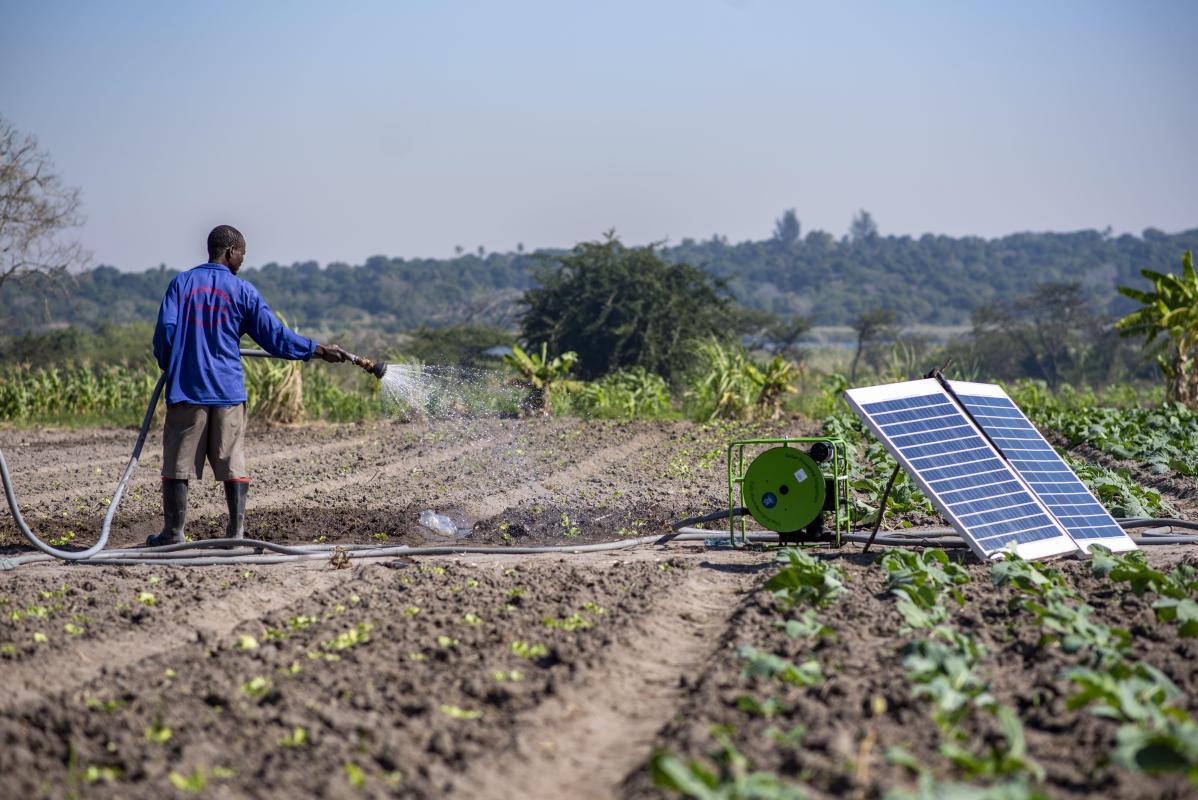
SunCulture, a Kenyan solar-irrigation company and one of ARAF I’s earliest investments, offers a partial check from the operating side.
Acumen returned as a follow-on investor in SunCulture’s $27.5 million Series B, and CEO Samir Ibrahim called the round, ARAF included, “a testament to the hard work and dedication of our team, and it reinforces our mission to make farming more profitable, sustainable.”
Not a comment on ARAF II or fund economics, but a real portfolio founder’s voice, independent of Acumen’s own announcement.
The Thesis, In The Fund’s Own Words
Acumen’s President and Chief Investment Officer, Carsten Stendevad, framed the fund’s first phase as evidence rather than experiment: “ARAF proved that resilience is investable, not theoretical. We’re bringing more blended capital and more partners to the table to help smallholder farmers across Africa adapt to a changing climate. This is the kind of capital the moment demands.”
ARAF’s managing director, Tamer El-Raghy, was more specific about the underlying thesis to ImpactAlpha: “Africa’s largest opportunity is to feed itself.”
Smallholders produce roughly 80% of the continent’s food supply on land increasingly exposed to drought, flooding, and erratic rainfall — which is the actual risk ARAF II is underwriting, not the more familiar story of African agriculture needing capital to grow.
This fund is pricing climate volatility directly into an asset class, not treating it as a side effect.
An Instrument Worth Watching
One structural detail is worth flagging for anyone reading this from the DFI or blended-finance side specifically: ARAF II deploys equity, quasi-equity, and self-liquidating instruments rather than straight equity alone — financing structures built to match agriculture’s longer, slower cash-generation cycles instead of forcing farm-linked businesses into venture-style return timelines they were never built for.
That’s a meaningful design choice most funds targeting this sector skip, and it’s worth watching for whether it becomes a template other agri-focused blended vehicles start copying, the way explicit first-loss tranching itself has become increasingly standard practice across DFI-anchored funds over the past few years.
What’s Still Open
Acumen is three-quarters of the way to ARAF II’s $120 million target, with the final quarter still to close.
The 80%-plus farmer income improvement from ARAF I is a real, disclosed result — but it’s Acumen’s own reported figure, not an independently audited one, and it’s worth watching whether ARAF II’s larger, geographically broader portfolio holds that ratio as it scales into markets the strategy hasn’t been tested in before.
