

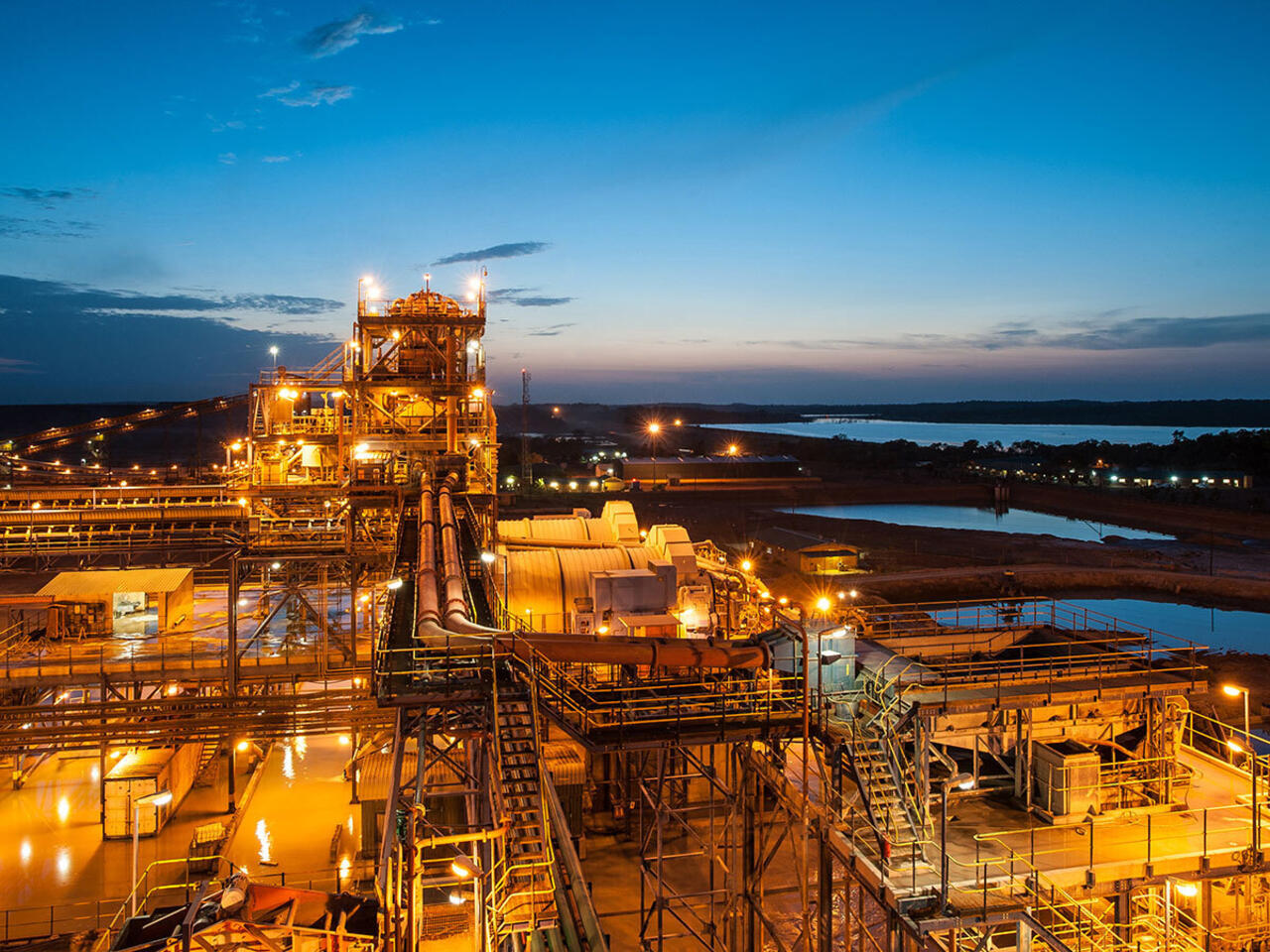
On 28 August, Mali’s Council of Ministers adopted, via Communiqué CM N°2026-34/SGG, a draft decree setting the ownership architecture for Mines de Kobada S.A., the vehicle formed to exploit the Kobada gold deposit in Kangaba, held under permit by Canada-incorporated, ASX-listed junior Toubani Resources.
The headline number is 35%. Read only as a headline, it sounds like the latest entry in Africa’s resource-nationalism ledger — another government deciding it wants a bigger piece of the rock. That reading misses the story.
Worth pausing first on the communiqué’s own words: the 35% is «la participation de l’État et des investisseurs nationaux» — the state and national investors, combined. Even the government’s framing isn’t “35% for the state.”
It is one national stake with three owners inside it. And it is not one instrument. It is three, stacked, each with a different price and a different risk profile.
Ten percent arrives free, non-dilutable, no cash required. This is a carried interest — the state holds equity without ever writing a cheque, and its stake cannot be diluted by future capital raises. Twenty percent is additional participation, but paid for in cash. The state has to fund it. Five percent is reserved for Malian private investors, who will need their own capital to take it up.
Three instruments. Three different relationships to risk. And they’re all being reported as one number, which is exactly the problem.
This is the mechanism the 2023 Mining Code built — Loi n°2023-040 du 29 août 2023 — and Kobada is its first full-dress test case. Before the code, the state’s participation in new projects was capped at 20%.
The new ceiling is 35%, and Mali has paired it with an institutional build-out to match: on 6 February 2026, the Council of Ministers adopted texts creating the Société de Patrimoine minier du Mali — SOPAMIM S.A., a société anonyme whose capital is held 100% by the state, mandated to take stakes for its own account, carry participation on behalf of nationals, and manage the state’s shareholdings across mining companies — rather than leaving them scattered across ministries.
Economy and Finance Minister Alousséni Sanou put a figure on the ambition when the code was adopted: an additional $500 million a year in state mining revenue once the reforms take full effect. Kobada is the mine where we find out what that actually costs the state, not just what it earns.
It is also worth knowing how much of this story has already happened. The 35% architecture was agreed back on 31 March 2025, when Toubani signed its mining convention with the state — the first such convention concluded under the new code.
In January 2026, the government approved the transfer of the exploitation permit, giving the project its formal green light. Earthworks began in March 2026, and first gold is targeted for Q3 2027. In July, Toubani closed a US$208 million binding funding package — a gold stream, an underwritten equity raise, and a term-sheeted facility from AFG Bank — with over 60% of the project’s US$216 million capital cost committed.
Kobada, at 162,000 ounces a year over a 9.2-year mine life at an all-in sustaining cost of US$1,175/oz, is fully financed on the operator’s side.
The August communiqué, then, is not the birth of the deal. It is the codification of it — and the moment the state’s side of the bargain became concrete. SOPAMIM held its first board session on 18 August 2026, ten days before the decree, with Sanou in the chair.
His framing deserves attention: the ambition, he said, is to transform mining revenue into «un patrimoine productif et pérenne» — a productive, lasting national patrimony — through an approach of «préserver, investir et fructifier.» Preserve. Invest. Grow returns. Mali is describing itself not as a rentier but as an investor.
But here is the gap no communiqué fills: SOPAMIM’s capitalization is undisclosed. The February texts that created it publish no capital amount, and the board that met in August did so without one having been announced. Meanwhile, the operator’s side of the chequebook is fully committed.
An entity expected to fund a 20% paid-in position in the country’s flagship new gold mine has no published capital base. Where that money comes from — treasury appropriation, mining-revenue earmarks, debt — is now the single most operational question in Malian mining policy.
Here’s where the comparison sharpens the point. The DRC’s 2018 Mining Code, signed into law by President Kabila that March, did something that looks similar from a distance — it doubled the state’s free-carried interest from 5% to 10%, non-dilutable, same as Mali’s base layer. But DRC stopped there as a matter of code design.
Beyond the 10% carry, additional state equity stays a discretionary negotiation on “strategic” projects rather than a standing paid-in right — a posture DRC’s own Mines Minister at the time, Martin Kabwelulu, more or less confirmed weeks before the signing: as Global Witness reported, citing Reuters, Kabwelulu said companies’ concerns “would be considered on a case-by-case basis,” rather than written into the code as a standing entitlement.
Mali went further: it wrote the paid tranche into the code itself, as a default right the state can exercise, not a negotiation it has to win project by project.
That’s the tell. Mali isn’t just claiming a bigger rent. It’s building the machinery to be a repeat capital allocator in its own mining sector — an entity that has to raise or find the money for the 20%, decide when to exercise that right, and carry the downside if the mine underperforms once it has paid in. A pure carried interest costs a government nothing and risks nothing beyond opportunity cost. A paid-in stake is a real investment decision, made with real money, against real geological and price risk.
So is Mali negotiating a better share of the value, or a larger share of the risk?
The honest answer is both, and the 20% cash tranche is where that tension actually lives. On a free carry, the state’s interests and the operator’s interests are loosely aligned — Mali wants the mine to produce, full stop, because its 10% costs nothing either way. On the paid 20%, Mali now has capital at risk that competes, at the margin, with every other use of that money — roads, health, debt service.
If gold prices soften or Kobada’s economics disappoint, SOPAMIM owns a stake it paid for, not one it was gifted. That is a genuinely different kind of exposure than a carried interest, and it is the part of this story that a “35% for the state” headline erases entirely.
For operators and allocators, the implication is structural, not sentimental.
You are no longer underwriting one government counterparty at Kobada — you are underwriting three: a state that behaves like a passive rentier on the 10%, a state that behaves like a genuine LP on the paid 20% whose capital now competes with roads and debt service, and a fragmented pool of domestic investors on the 5% who may or may not have the capital to take up their allocation — a gap that, left unfilled, tends to quietly revert to whoever else is willing to fund it.
Model those three separately. A country’s “free carried interest” line item tells you almost nothing about how the government will actually behave once it has money in the deal.
For African policymakers watching this precedent, the lesson is the inverse, and colder: a paid-in stake the treasury can’t fund — or won’t defend with private-investor discipline — is worse than no stake at all. The DRC chose cheap and simple. Mali chose larger and genuinely at risk.
And the test is already running. Kobada is under construction, first gold is targeted for late 2027, and SOPAMIM — created in February, board seated in August, capitalization undisclosed — has yet to show where the money for the 20% comes from.
That is the story underneath the story. Not who owns Mali’s gold. What kind of owner Mali just decided to become.
