

The Deal, As Far As It’s Confirmed
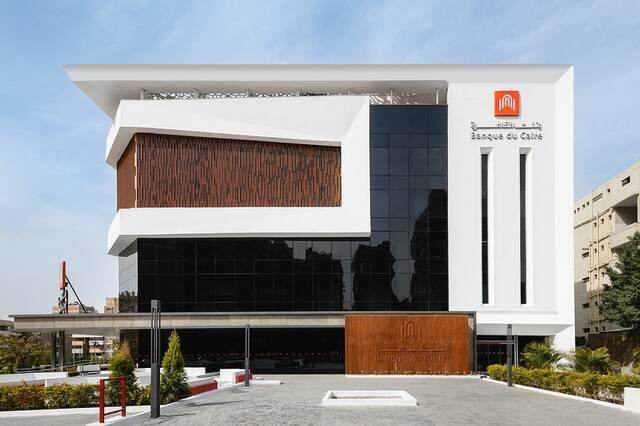
Per EnterpriseAM’s reporting on 17 August, EBRD and IFC are looking to buy into Banque du Caire’s planned float, which Hashem El Sayed, CEO of Egypt’s State-Owned Companies Unit, says will complete in November, with the institutional tranche covered within a week of launch.
An EBRD official — unnamed in the reporting TACR could locate, so treat the attribution as institutional rather than personal — confirmed the bank’s interest. The goal, per that official, is to “contribute to Banque du Caire’s capital” and, in doing so, draw in other investors and shore up confidence in the bank’s balance sheet.
The split isn’t finalised. EBRD’s own slice could run as high as 5%. IFC is described as expected to take the remainder of the 10% “once it formally joins the transaction” — language from the same EnterpriseAM report, not from IFC itself.
TACR made a direct attempt to close that gap before this went to final edit: searching IFC’s own pressroom and news channels for any statement, filing, or comment — including a decline to comment — on this specific transaction, and separately checking whether EFG Hermes or CI Capital, the IPO’s actual bookrunners, had said anything publicly about DFI participation in the book. Neither search produced anything. Every account of IFC’s involvement traces back to the same EnterpriseAM report and the same unnamed EBRD source. Until a named IFC statement or an on-record capital-markets participant surfaces, IFC’s participation should be read as reported by a single outlet attributing it to an unnamed EBRD source — not as IFC-confirmed.
Why Equity Here, Not Debt
A DFI extending debt to a solar plant is pricing project risk — construction risk, offtake risk, currency risk on a specific asset. A DFI buying equity in a state bank’s IPO is doing something else: signalling to every other investor in the book that the deal is credible enough for a multilateral development institution to put its own balance sheet behind it.
That’s the mechanism the EBRD official named directly — capital going in specifically to “draw in more investors.” It’s closer to an anchor-investor role than a lender’s, and DFIs play it deliberately in privatisation transactions because their participation functions as a credibility signal other institutional capital reads and follows.
Not The First Approach
Both EBRD and IFC reportedly submitted offers for minority stakes as far back as March, among a handful of other interested parties, before the IPO itself kept slipping. EBRD’s relationship with Banque du Caire also predates this IPO on the lending side: EBRD and British International Investment jointly provided the bank a $100 million loan in January 2023, per deal-tracking data. If the IPO stake closes, it would convert an existing lending relationship into an ownership stake — a graduation, not a cold approach.
The Number, Traced Properly
The $500 million figure attached to this IPO isn’t new. EnterpriseAM’s own 8 March explainer describes anchor investors as funds able to “write a meaningful ticket for an IPO that, in this case, could be worth up to USD 500 mn” — the clearest sourced statement of the figure for this specific 2026 attempt.
That number has a longer history than one explainer box, though. It traces back to Chairman Tarek Fayed’s own statement to Reuters in March 2020, reported by Arab News at the time: “the main objective is to raise funds in the vicinity of $500 million,” with $50–75 million of that earmarked specifically for anchor investors. Six years and several collapsed attempts later, the same target figure is still what’s being quoted. Worth noting as a data point on its own, regardless of what it says about the deal.
The History Worth Knowing Before Treating This As Settled
Banque du Caire’s IPO has been announced and pulled more times than almost any other Egyptian privatisation on record: shelved in 2008 amid the global financial crisis, stalled on market readiness in 2017, killed by COVID in 2020, derailed by the Russia-Ukraine war in 2022, pushed out again on valuation disagreements in 2025. In 2026 alone it has already slipped from an original Q2 window to June to a targeted November close, with the stake size itself still unconfirmed — somewhere between a “conservative” 30–40% and the regulatory ceiling of 49%.
That history doesn’t mean this attempt fails too. Egypt has real momentum this year: roughly 20 state-owned companies already listed on the EGX since April, part of a stated government target of $3–4 billion in IPO proceeds by the end of 2026. But a transaction with a seventeen-year record of not closing isn’t one to treat as done because two DFIs are circling it. Their interest is real and worth tracking. It is not yet capital committed.
What This Means For The DFI Desk
Here, the product isn’t risk absorption, the way it is in blended infrastructure finance. It’s reputation, rented out to a transaction that needs it — in exchange for a stake in a bank whose own government has spent a decade and a half failing to get this exact deal across the line.
