


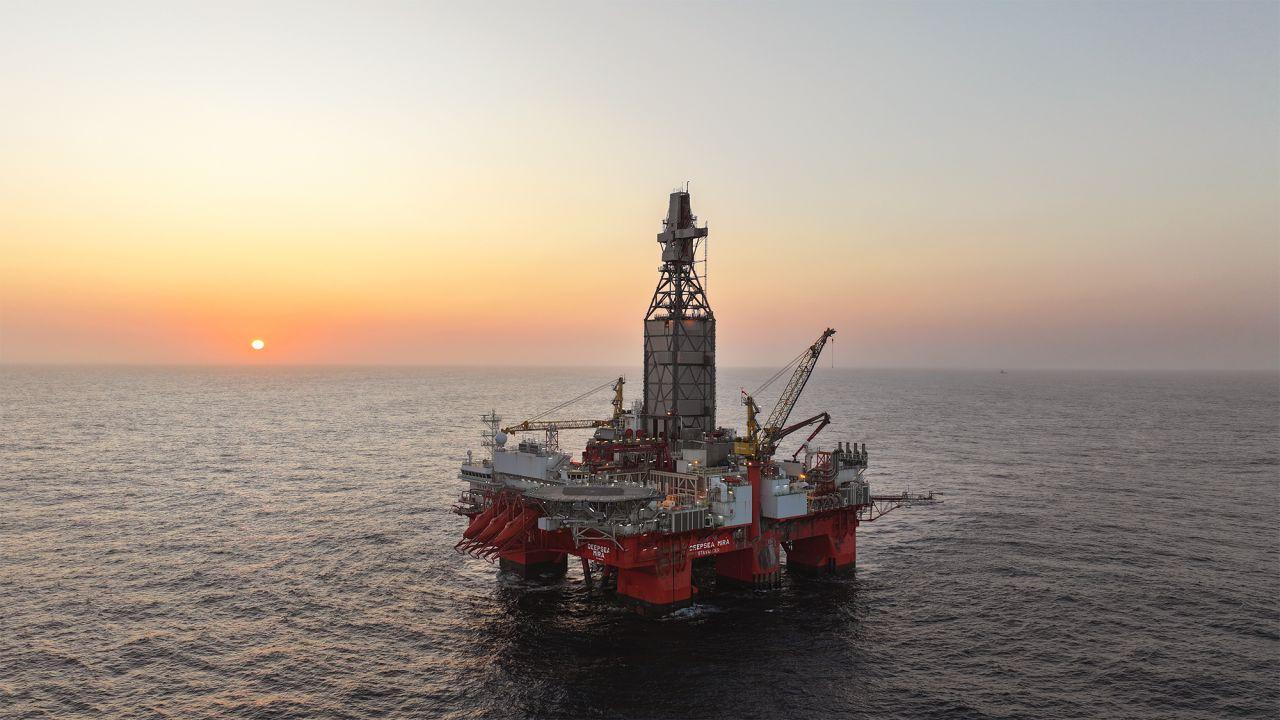
It’s between the African Development Bank’s $1.78 billion country strategy for Namibia and a public warning delivered at a half-day Bank of Namibia seminar on Tuesday, 4 August 2026, titled “From Discovery to Development: Preparing Namibia’s Financial Sector for a Sustainable Oil and Gas Economy,” reported by Namibia Economist the following day. The message from that seminar: the domestic financial sector is not yet structured to finance the industry the AfDB strategy is meant to support.
The FID Timeline Is Real
Start with what’s confirmed. bp entered Namibia in April 2026, acquiring a 60% operating stake in offshore blocks in the Walvis Basin. TotalEnergies is expected to reach a final investment decision on its Venus development before the end of 2026. Galp’s Mopane discovery, potentially holding up to 10 billion barrels of oil equivalent, is moving through an accelerated appraisal campaign, while Shell continues delineating its Graff and Jonker finds. That pipeline is genuine and dated.
The Ports Story Is Less Linear Than It Looks
The infrastructure narrative that usually accompanies FID coverage is more uneven than the “racing to build” framing suggests. Namport deepened the Walvis Bay entrance channel from 14 to 16.5 metres in mid-2025, and Mediterranean Shipping Company designated Walvis Bay its Southern Africa West Coast transshipment hub in January 2025. A N$4 billion Lüderitz port expansion — a 500-metre quay extension and 14 hectares of reclaimed land — is targeting capacity delivery by 2027.
But as of October 2025, Namport had paused southern-harbour upgrades to “clarify scope” and cancelled a Lüderitz supply-base tender days after launching it, according to World Oil’s reporting on the Orange Basin timeline. A build-out this consequential does not appear to be moving in one direction only.
What the Banks Are Actually Saying
This is where the story departs furthest from the “capital front-running” premise. At the same Bank of Namibia seminar, Governor Ebson Uanguta called on the sector to strengthen its technical expertise, governance and risk-management capability before it could participate sustainably in the industry — a statement about capacity that does not yet exist, not one already built.
At the 4 August seminar itself, former Minister of Mines and Energy Tom Alweendo, who also served as Bank of Namibia Governor, warned that local companies may win contracts on paper but fail to deliver because they cannot obtain working capital, equipment finance, guarantees or insurance support. Erastus Nakasole, senior economic researcher at Monasa Advisory, put the underlying constraint on record directly in a separate interview with The Villager on 6 August: “The industry is capital-intensive and requires significant funding. Access to finance will depend on the banking sector and government putting in place regulations that support lending.”
The IMF’s own data gives that warning a number. Its Namibia Staff Country Report (Volume 2025, Issue 133, published June 2025) found that 66% of Namibian firms surveyed in the World Bank’s 2024 Enterprise Survey — 203 of 307 — view access to finance as an obstacle ranging from minor to very severe, and that the country’s non-mining private sector struggles to access bank credit specifically because of collateral requirements. The same report notes that mining companies, Namibia’s largest business entities, mostly bypass local banks altogether, relying on intra-company loans from their parents instead.
That’s the structural pattern the local-content financing conversation is trying to interrupt: bank credit already underserves the non-resource private sector, and the sector local content policy is meant to grow — Namibian-owned oil and gas suppliers — sits inside that same underserved category by definition.
What’s missing is a bank-side voice confirming or disputing that constraint specifically for oil and gas lending, and it’s worth being direct about that gap rather than filling it. The two named, current commercial bank voices on record in 2026 are FNB Namibia’s Group Head of Oil and Gas Strategy, Angelique Peake, and RMB Namibia’s Coverage Manager for Oil and Gas and Energy, Olavi Hangula, both quoted at the April 2026 launch of an exchange-control guidance booklet. Their public comments address regulatory clarity and sector momentum — Peake noted that continued exploration activity signals momentum will persist — not lending capacity or loan-book constraints. No Namibian commercial bank credit officer or risk committee member has gone on record in 2026 discussing actual loan-book constraints for oil-and-gas-linked lending. That silence, sitting next to two regulators and an independent researcher who have all spoken publicly about the same gap, is itself a data point.
The One Disclosed DFI Number — And What It Actually Covers
AfDB’s $1.78 billion is real and board-approved, confirmed 5 December 2025 as the Bank’s Country Strategy Paper for Namibia covering 2025–2030, with Deputy Director General Moono Mupotola naming transport, energy and water infrastructure as the first of two strategic priorities. But that figure is a five-year strategic envelope, not a project-specific guarantee facility for a named port or desalination plant, and implementation was only expected to begin in early 2026.
The one AfDB commitment that is deal-specific and dated is smaller and earlier-stage than the headline number suggests: a $10 million loan from AfDB’s Sustainable Energy Fund for Africa, approved 10 December 2025, to fund front-end engineering design studies for Namibia’s green hydrogen project — solar and wind generation, battery storage, electrolyser capacity and desalination infrastructure. That is a de-risking instrument for studies, not construction capital, and the distinction matters for anyone pricing how close this money actually is to breaking ground.
Local Content Financing Infrastructure Predates The Deals It’s Meant To Fund
Cabinet approved Namibia’s National Upstream Petroleum Local Content Policy only five days before this was written, per Minister Itah Kandjii-Murangi’s deputy, Emma Theofelus. The Development Bank of Namibia and Petrofund both have instruments aimed at SMEs entering the energy value chain, but the guidance local businesses are actually being given — as reported by The Namibian in June — is to begin financing conversations now, before a contract is in hand. That sequencing is worth noting plainly: the lending infrastructure is being built ahead of, not in response to, actual local-content deal flow.
Where Private Capital Has Actually Moved
Verified private investment activity onshore is smaller and more concentrated in hospitality and tourism than in energy-adjacent logistics. The clearest example is the Lüderitz Waterfront Development Company’s third-phase expansion — a hotel and private hospital, structured with the waterfront holding a 25% stake in exchange for prime land while a private investor finances and builds. That is real, disclosed, and specific.
It is not, however, evidence of the cold-storage, port-logistics, or industrial real estate “land grab” the pre-FID thesis anticipates. No named private equity fund or infrastructure investor has publicly disclosed acquisitions of that kind around Walvis Bay or Lüderitz in the material available for this story — an absence worth stating directly rather than inferring activity that hasn’t been reported.
The Real Test
Four things are established: the FID pipeline is real and dated, AfDB has committed serious strategic capital at the country level, a local-content regulatory framework now formally exists, and one tourism-linked private investment is underway in Lüderitz.
What is not established is harder to sit with. Namibia’s own regulators — not critics, not competitors, the Bank of Namibia governor and a former minister who once ran that same institution — used a public seminar to say the banking sector cannot yet lend against this pipeline at scale. IMF data confirms the underlying credit-access constraint is real and structural rather than anecdotal. And neither a named commercial bank credit officer nor any disclosed private equity fund has stepped forward to say the gap is smaller than it looks from outside.
That turns the interesting question from “how much capital is moving” into a narrower, more falsifiable one: whether Namibian banks close the readiness gap Alweendo described before TotalEnergies’ 2026 FID lands, or whether his own warning proves correct — that advisory fees, project structuring and insurance placement get captured by foreign entities while domestic institutions are still building the risk frameworks to compete for that business. The next port expansion announcement or bank syndication headline should be read against that specific, dated warning, not against the assumption that the capital race is already underway.
