

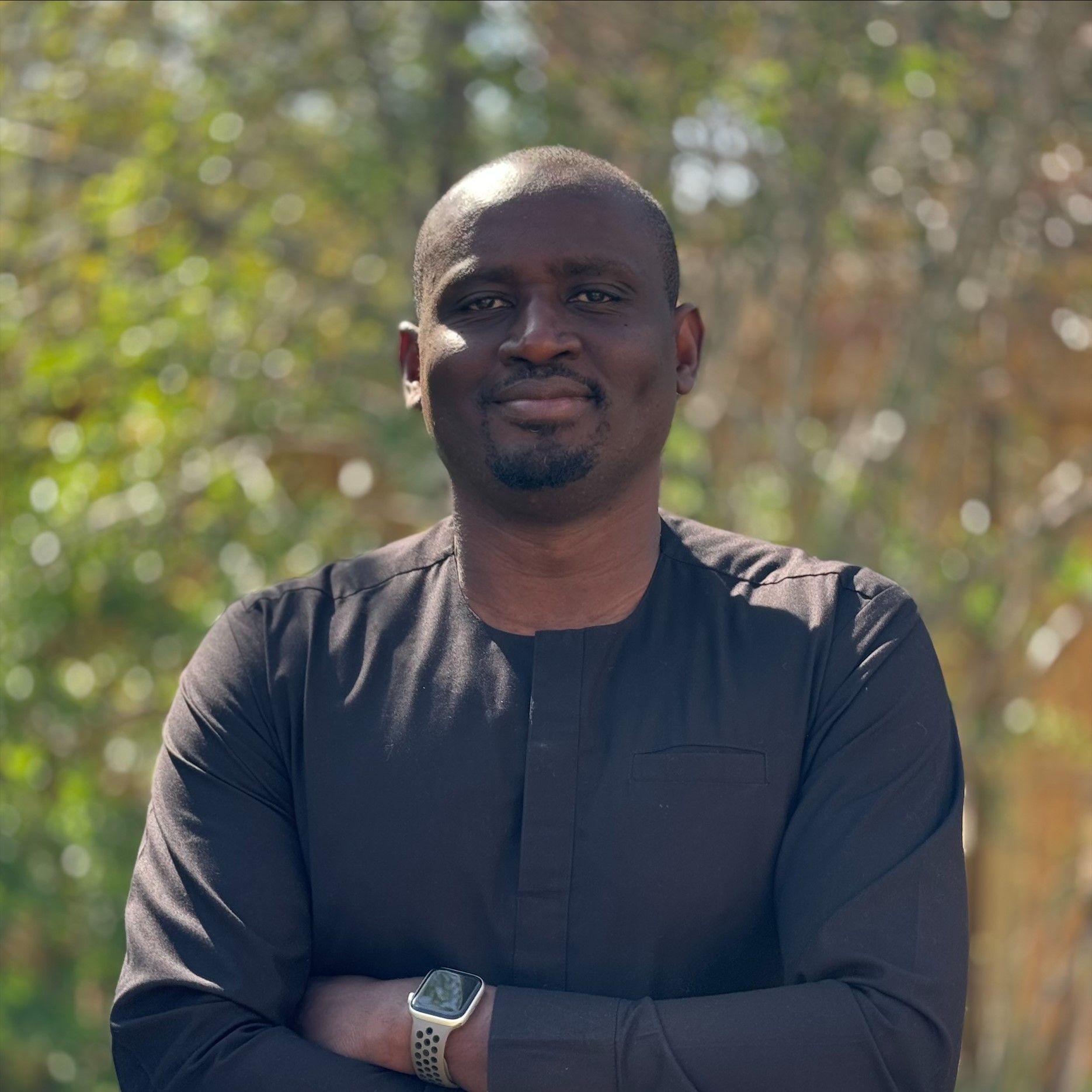
Ayo Sopitan tells a version of his origin story that most founders would edit out. He didn’t set out to build a mining company. He set out to build a trading company — which is why, years later, the name on the door still reads Metalex: metal exchange, not metal extraction.
“If I thought I was starting a mining company, I probably wouldn’t have started,” he says now, running the operation from a schedule that splits between remote mine sites across Africa and his family’s home in Houston, Texas. The company operates as Metalex Commodities globally, and as Metalex Africa in the subsidiaries closest to the ground — a naming choice that, like a lot about Sopitan, says more about intent than it first appears to.
The intent traces back to trading floors in New York and London, where Sopitan spent close to a decade in commodity trading and risk management. What he noticed was there wasn’t a gap in the market. It was a seat he didn’t have.
A large share of the metals the world trades — and profits from — originates in Africa. He was, by his own description, typically the only African in the room doing the trading, while the value creation on the ground stayed somebody else’s story to tell. “I felt like I was on the wrong side of the table,” he says. So he went home to find out what it would take to sit on the other one.
Three pivots to get the model right
The first version of Metalex was an aggregation play: gather output from Nigeria’s vast population of subsistence and artisanal miners — people producing perhaps a ton a month each in any metal outside gold — pool it, repackage it, and sell into consumer markets at scale. It didn’t survive contact with reality. There weren’t enough small-scale producers concentrated in any one place to hit meaningful volume, and the operators who did produce at scale had no need for a middleman.
The second pivot solved for volume: Metallex started operating its own mines. That surfaced a third, more stubborn problem — quality. Nigeria’s mineral wealth is real, Sopitan says, and in places like Niger State, Nasarawa, and Taraba he has seen material quality that would turn heads anywhere in the world.
The constraint isn’t what’s in the ground. It’s consistency at scale. Solving that meant becoming a processor, not just a producer — which is the business Metalex runs today. Its flagship asset is a Zambian processing facility built to handle roughly two million tons of ore a year, positioning it among the largest processors in the country.
The operating terrain, compared honestly
Sopitan doesn’t romanticize doing business in Africa, and he doesn’t pretend the alternative is uncomplicated either. Permitting, he says, moves faster across most African mining jurisdictions than it does in the United States, where the process alone can take years. What’s missing on this side is organization: weak regulatory enforcement, and — in his words — “people problems,” where non-performance carries no real cost unless the aggrieved party has enough power to make it cost something.
He contrasts this with his experience in Morocco, where logistics infrastructure between mine and port, along with trucking services and pricing transparency, functioned close to what he’d expect anywhere in the world. The variability, he’s clear, is regional and institutional — not a verdict on the continent.
A quieter case against VC-centrism
Sopitan is currently part of an MIT fellowship cohort touring African markets, and the experience has sharpened a view he holds about his own ecosystem: venture capital talks louder in Africa than its actual footprint justifies. He recounts a session in Egypt where a founder in a regulated industry asked a venture investor how to think about building in that space — and got told, in effect, not to build regulated businesses at all. Sopitan calls the comment “self-unaware,” and reads it as symptomatic of an industry that mistakes its own preferences for the market’s needs.
He also writes angel checks, and the same temperament test he applies to mining ventures governs those bets. He’s watched a quiet, almost shy founder deliver a significant exit, and a loud “we’ll take over the world” founder from the same cohort quietly exit the industry altogether. What he’s looking for is closer to resilience than charisma: someone who treats failure as existential rather than iterative — the founder for whom, if this doesn’t work, there is no casual “idea number two.” He calls the work “chewing glass,” and says the ones worth backing are the ones prepared to keep chewing.
Crucially, he draws a hard line between that resilience and stubbornness for its own sake. A founder honest enough to recognize a strategy isn’t working and change direction isn’t giving up — that’s the discipline he wants to see. “If you’re headed the wrong way,” he says, quoting a bumper sticker that stuck with him, “remember God allows U-turns.” The founders who get his money are the ones building businesses that expand the paying-customer base, not the ones pitching TAM math to venture investors. 😀
His broader argument: Venture capital is a genuinely high-leverage sliver of a much larger funding picture. Stanford GSB research found that VC funds invest in only 0.19% of new U.S. businesses, yet VC-backed companies founded between 1979 and 2013 comprised 57% of the market capitalization of all such “new” public companies.
More recently, the Information Technology and Innovation Foundation found that between 2018 and 2022, VC-funded firms accounted for just 0.2% of U.S. firms but employed 12.5% of the workforce. Impressive leverage, he grants. But it leaves the other 87.5% of the employment question — and, in his view, the more urgent one for African markets — largely unaddressed.
That view is echoed outside the mining world. A 2025 BCG analysis of African climate finance argued that “traditional venture capital models, particularly those rooted in high-risk, high-stakes hyper-growth strategies like ‘blitzscaling,’ imported from the US, are ill-suited to the realities of African markets.”
Sopitan is skeptical of total-addressable-market math that assumes 200 million people are a real market simply because 2.5% of them would be “enough.” The uncomfortable arithmetic, he says, is that only a small fraction of that population has the disposable income to be a paying customer for anything.
What Africa needs more of, he argues, are businesses that expand that base directly — he points to Tanzania’s Export Trading Group, which employs more than 6,000 people directly, operates across 26 African countries, and connects over 600,000 farmers to markets, as an example of a commodities business creating employment at a scale that eventually produces customers for everyone else’s product, apps included.
The Zambian facility will process roughly two million tons of ore a year. That is a lot of metal. But the figure Sopitan keeps returning to is not tonnage. It is the 87.5% — the share of American workers who clock in each day at companies that never saw a term sheet, and the even larger share of African employment that venture capital has no model for. The metals are in the ground. The capital, he argues, is still on the wrong side of the table.
Ayo Sopitan is the founder and CEO of Metalex Commodities. He spoke with Solomon King on Angels Lounge.
