

I have sat across from more term sheets than I can count over the past two decades of moving capital into and around African markets. The deals that die rarely die on valuation. They die on a due-diligence question nobody can answer with confidence: what happens to this contract if the regulatory environment shifts, and how would we even know before it did?
Investors don’t walk away from Africa because the returns aren’t there. They walk away because they can’t price the legal ground they’d be standing on.
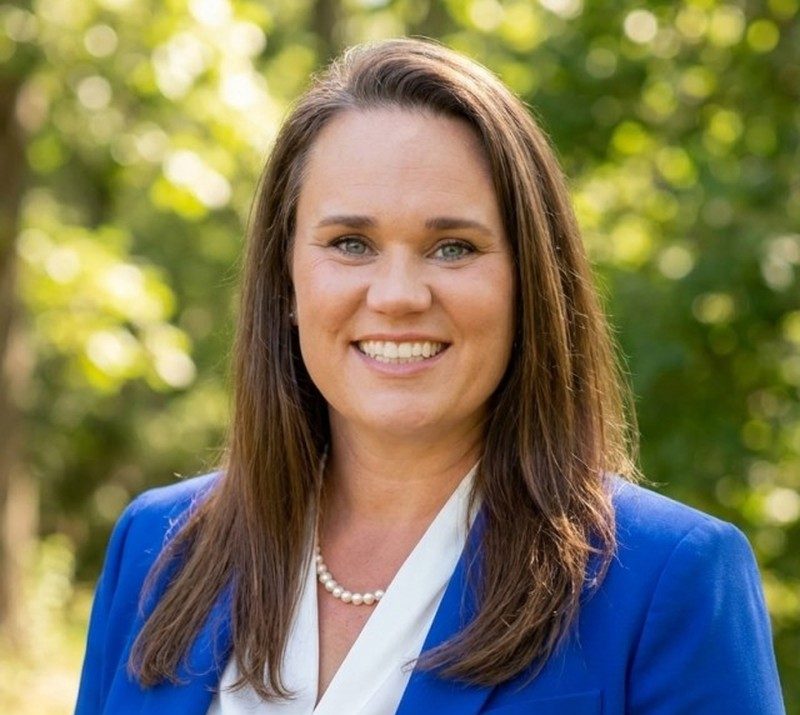
So when I sat down with Megan Waters, co-founder and CEO of the Dakar-based Yamalé Alliance, I wasn’t looking for a lawyer’s complaint about her own industry. I was looking for confirmation of something I’d been pricing informally for years without a name for it.
Waters is an American corporate lawyer who has spent the better part of two decades inside African legal systems rather than commenting on them from outside. She was a law lecturer and founder of the West African Law Institute in the Gambia.
She was a foreign consultant to Geni & Kebe Lawyers in Senegal. She spent seven years as a contracting officer for USAID in Uganda. She is married to a Senegalese national, raises her children in Dakar, and is naturalizing as a Senegalese citizen. “Yamalé” is Wolof for “equal footing” — which tells you most of what you need to know about the thesis.
“Roads can get better, ports can get better, corruption can go down,” she told me, “but if you don’t have a legal system that supports the business and the trust to back it, it’s still going to fail.”
The Problem Isn’t the Law. It’s Finding It.
Yamalé’s starting point is almost embarrassingly basic. In much of the continent, you cannot reliably find out what the law actually is. “In Kenya, South Africa, Ghana — you’re doing great with laws and accessibility,” Waters said. “In other countries, you can’t find laws at all. They’re not available, or they’re available in pieces, or you find an outdated version.”
Yamalé is building three layers on top of that gap. The first is digitizing and centralizing law across all 55 African jurisdictions. The second is an AI research layer trained on a closed, verified database — a deliberate rebuke of what happens when businesses turn to general-purpose AI instead.
“If you ask Claude or ChatGPT a question about the law in an African jurisdiction, you’re almost guaranteed to get a hallucinated or inaccurate answer,” Waters said, “and a lot of businesses are already using these tools to cut out lawyers.”
The third is a continent-wide network of vetted local counsel. Once a business outgrows AI research, it gets matched to a lawyer from the jurisdiction itself — not, as she put it, “a French or British or American lawyer with the local firm added at the end as a check-the-box exercise.”
That last point comes from lived frustration. Working at a Senegalese firm, Waters said, meant routinely being the afterthought on deals for her own country’s clients. International investors default to counsel from home. “We want to cut out the middleman,” she said. “It doesn’t matter that I’m originally from the United States — I don’t mind cutting us out.”
Legal Risk Is a Line Item, Not a Mood
The more useful argument Waters makes is about how legal infrastructure shows up in an investment decision. It isn’t vague “risk.” It’s a specific, priceable cost: registration timelines, environmental and tax compliance, contract enforceability, and above all, predictability. Can a business forecast its compliance cost two years out, or is the ground shifting under it?
She offers an uncomfortable case study from inside her own industry. There is no published legal hourly rate anywhere on the continent. “There’s no way to find out what you’ll pay for legal fees,” she said. “So the default for outside companies is to use their own jurisdiction’s firm — a British company uses a British firm — because it’s predictable. Local fees get renegotiated deal by deal, relationship by relationship.”
If a market can’t price its own lawyers consistently, it’s little surprise outside capital struggles to price everything else. This is the exact instinct any family office or SME doing legal due diligence on an African market should adopt: treat the absence of predictable, published cost as a risk premium to be quantified, not a vague discomfort to be waited out.
On contract renegotiation — a live sore point given recent moves by several African governments to revisit extractive-industry agreements — Waters is candid about the tension. She supports renegotiating deals she believes shortchanged African states.
But she’s blunt that a mid-contract unilateral change is a losing position in international arbitration, regardless of how justified the grievance. The fix isn’t to avoid renegotiation. It’s to build a legal system robust enough that today’s contracts don’t need it tomorrow.
OHADA as Proof of Concept — and Its Limits
Waters points to OHADA, the harmonized business-law framework, as evidence that legal unification is achievable at scale, not just aspirational. Her figure checks out against OHADA’s own account.
The Organisation for the Harmonization of Business Law in Africa was established by the 1993 Treaty of Port-Louis and revised in 2008. Today it counts 17 member states across West and Central Africa operating under a shared body of Uniform Acts covering company law, secured transactions, arbitration, and insolvency — a specific attempt to replace legal fragmentation with a common commercial code across a market OHADA itself estimates at over 225 million consumers.
She’s also an outspoken supporter of the African Continental Free Trade Agreement, despite its slow implementation. “People are quick to say it’s not working,” she said. “It takes governments actually willing to implement what they’ve signed. I spoke to someone at the AfCFTA Secretariat yesterday — they’re pushing.”
But she’s clear-eyed about what harmonization on paper doesn’t fix.
Local officials still apply OHADA law inconsistently day to day. Full harmonization requires governments to genuinely cede regulatory discretion to a shared system — something Anglophone Africa hasn’t attempted at OHADA’s scale. “Africa has the human capital, the physical resources, the capacity — everything it needs is already here,” she said. “It just has to learn to work together to move it.”
Africa Is Not a Country, and the Risk Story Is More Complicated Than It Looks
Waters’ sharpest frustration is definitional. Treating fifty-five countries with wildly different legal and political histories as a single “risky” or “resource-rich” bloc distorts every conversation that follows. She contrasts Senegal, a democracy since independence whose citizens visibly mobilized when democratic norms were tested, with Uganda, where the overwhelming majority of the population has known no president other than Yoweri Museveni. “Those are completely different investment cases,” she said.
She was also willing to sit with a genuinely uncomfortable question directly. Does a military regime, freed from democratic bickering, actually deliver more legal predictability? Her answer is a careful no with an asterisk. She points approvingly to Burkina Faso’s junta under Ibrahim Traoré, specifically its investment in mango-drying infrastructure to capture value from fruit that previously rotted unexported, as an example of a government moving fast to protect national economic interest.
But she’s unambiguous the model doesn’t survive its own logic long-term. “It can’t be forever,” she said. “You need opposition telling you what isn’t working. Some of the policies are scorched-earth. That might work short-term. It’s not a long-term solution.”
Worth flagging for the record: this is Waters’ characterization of the junta’s economic record, not an independently audited outcome. Readers weighing Sahelian governance more broadly should treat it as one practitioner’s field observation rather than a verdict.
The One Fix
Asked for a single, immediate intervention, Waters didn’t hesitate: transparent, digital, real-time publication of laws and judicial decisions — the Kenya model, where a court ruling is online within hours. That claim holds up independently.
Kenya’s National Council for Law Reporting, the state corporation branded Kenya Law, is the country’s official law reporter. It maintains a database of roughly 300,000 judicial decisions updated daily, and it publishes the Laws of Kenya and Kenya Gazette on kenyalaw.org — a level of real-time public access that most of the continent’s judiciaries don’t attempt.
The stakes, Waters argues, now extend beyond human researchers to the AI systems increasingly standing in for them. “When you run a search on the laws of Kenya, your accuracy is orders of magnitude higher than in a country where those laws aren’t published and current,” she said, “because the AI can only find what’s actually there.”
It’s a useful closing thought for anyone building capital intelligence products on the continent, TACR included: the quality of the answer is downstream of the quality — and availability — of the underlying record. Waters is betting a company on the idea that fixing the record is worth more than fixing the pitch. I’m inclined, on twenty-one years of watching deals stall for exactly this reason, to think she’s pricing the right risk.
This piece draws primarily on a single interview with Megan Waters; her account of OHADA’s structure and Kenya’s judicial-publication model is corroborated above, but her characterizations of Yamalé’s own traction, the Burkina Faso comparison, and the AfCFTA Secretariat conversation remain single-sourced and should be treated as her stated position pending independent confirmation.
